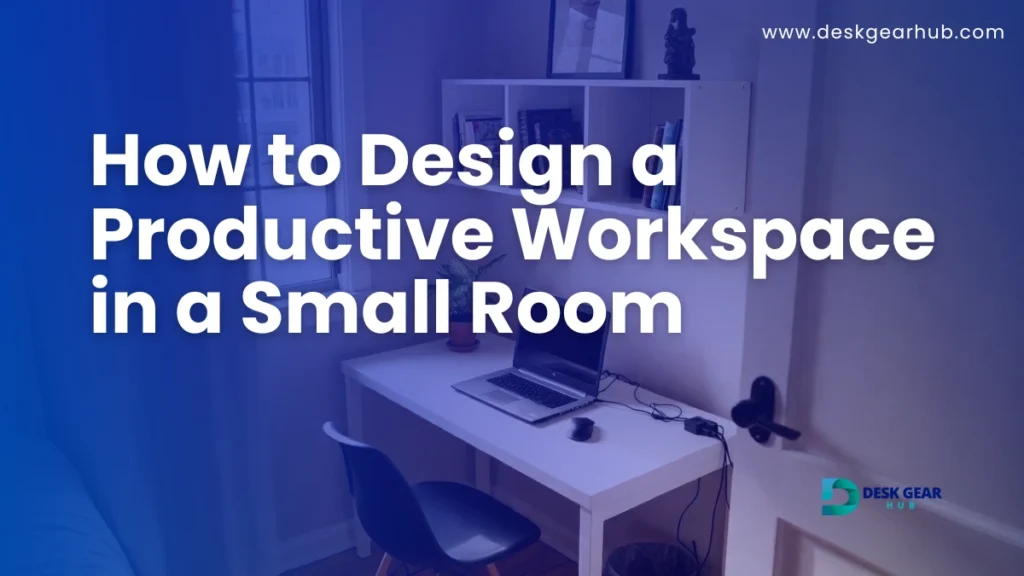
Small room workspace design doesn’t require a spare bedroom to create a truly productive home office. When you’re working with limited space, every single square foot counts—and the most common mistake I see is treating a tiny room like it has endless room to play with.
Here’s the thing: designing a workspace in a really small room isn’t about making it look like those Pinterest boards with the perfect minimalist setup. It’s about creating something that actually functions when you’re on your third Zoom call of the day and can’t find your charger.
Table of Contents
1. Figure Out What You Actually Need (Not What Looks Cool)
I made this mistake when I first started working from home. Bought a beautiful desk that was way too big, added a filing cabinet I never used, and wondered why I couldn’t move around without bumping into things.
Start backwards. What do you do in this space every single day? If you’re a designer, maybe you need dual monitors. If you take a lot of calls, you probably need decent lighting and a clean background. If you’re mostly typing and don’t deal with physical paperwork, you might not need half the storage you think you do.
Write it down:
- List every task you do at your desk in a typical week
- Note which equipment is genuinely essential (not “nice to have”)
- Estimate how much desk space those tasks actually require
- Cut everything else
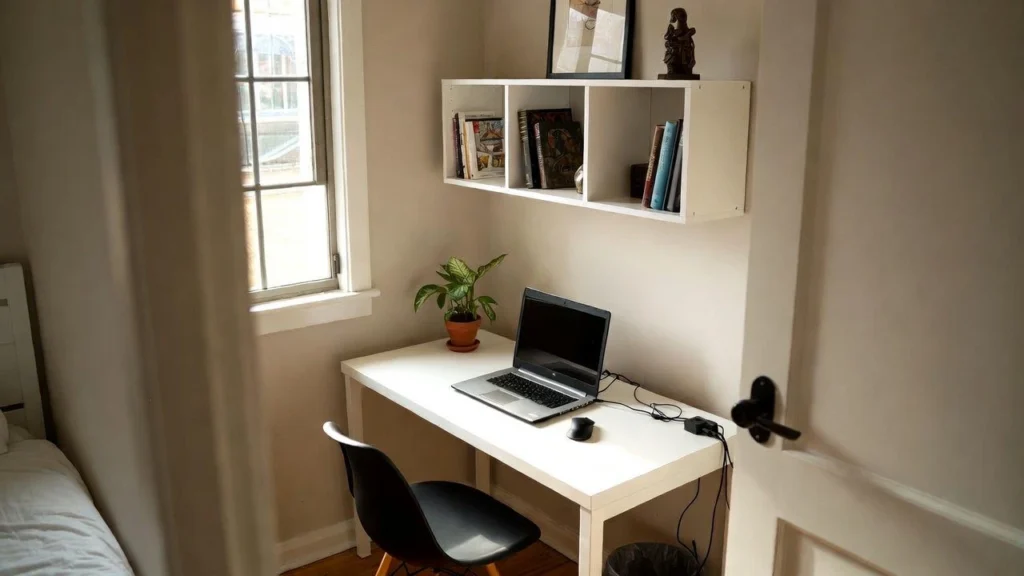
This sounds obvious, but you’d be surprised how many small home office design failures start with buying furniture before defining the function.
2. Measure Twice, Buy Once (Seriously)
I can’t tell you how many times people skip this step and end up with a desk that blocks their closet or a chair that won’t roll back without hitting the bed.
Grab a tape measure. Get the exact dimensions of your room. Write down where the outlets are. Note which way the door swings. Sounds tedious, but it takes maybe ten minutes and saves you from returning a desk that’s three inches too wide.
Here’s what actually works: use painter’s tape on the floor to outline where your desk will go. Then sit in that space like you’re working. Can you push your chair back? Does the tape square block the path to your door? Are you facing a wall or do you have some kind of view?
That blue tape doesn’t lie. If it feels cramped on the floor, it’ll feel cramped with actual furniture.
3. Create Boundaries (Even Fake Ones Work)
My first apartment was a studio. Literally one room for sleeping, working, eating—everything. The biggest mistake I made was thinking I could just “mentally separate” work from everything else. Spoiler: I couldn’t.
You need some kind of physical divider. Doesn’t have to be a wall. A bookshelf works. A folding screen works. Even a different rug under your desk can signal to your brain that this area is for work.
I started using a narrow bookshelf to separate my desk from my bed, and the difference was immediate. When I sat at my desk, I was working. When I moved to the other side of the shelf, I was done. That small home office idea—creating zones in a single room—changed how I felt about the space completely.
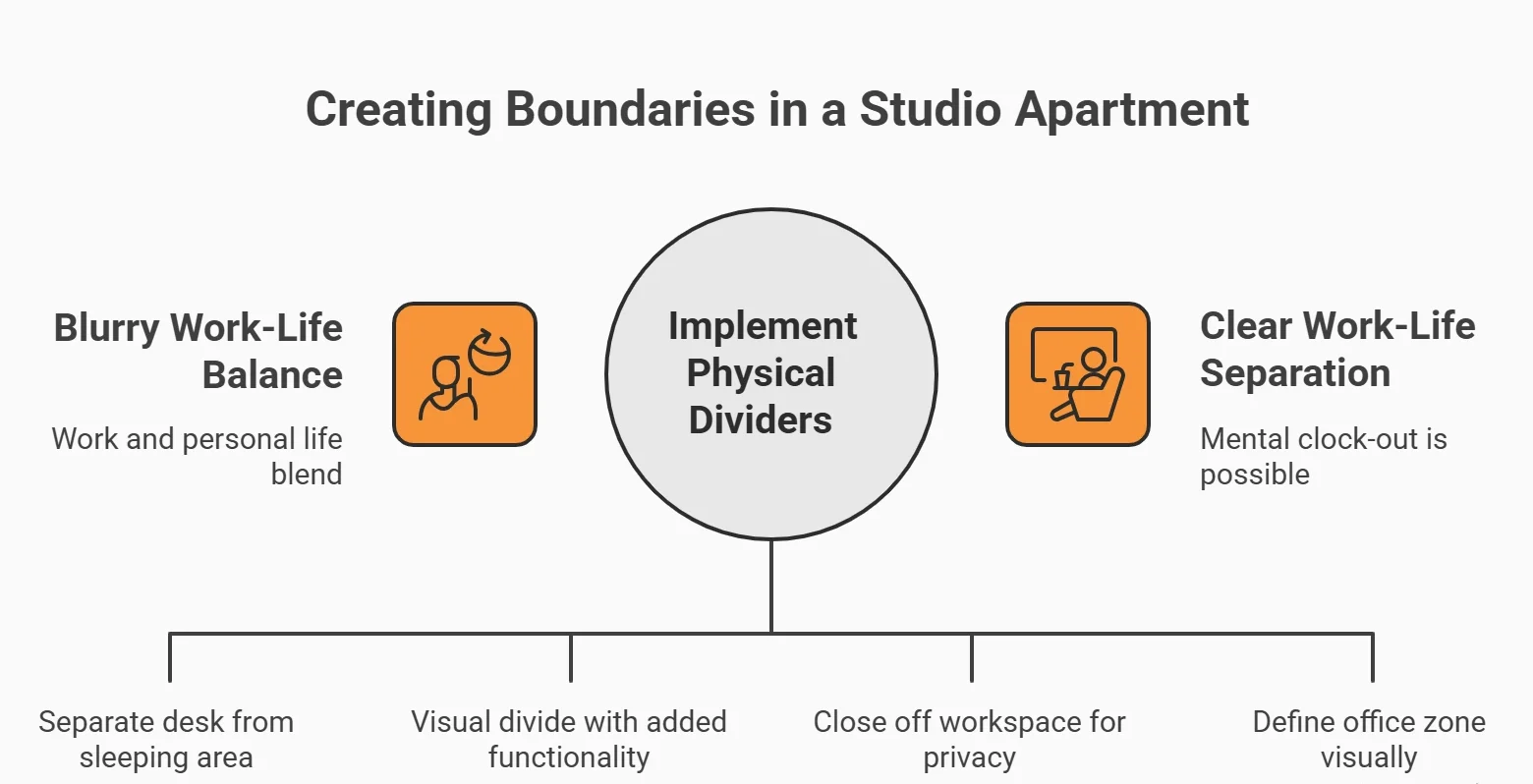
Ways to fake a boundary:
- Position a bookshelf perpendicular to the wall to create a visual divide
- Use a folding screen that doubles as a corkboard or whiteboard
- Hang curtains from ceiling-mounted tracks to close off your workspace
- Place a small rug under your desk to define the “office zone”
The goal isn’t to build walls. It’s to give yourself permission to mentally clock out when you leave that zone.
4. Use Your Walls (Because Your Floor Is Already Full)
Floor space in a small room disappears fast. Walls don’t.
Floating shelves saved my sanity when I was working in a bedroom that barely fit my bed. I mounted two shelves above my desk for books and supplies, added a pegboard for headphones and cables, and suddenly had room to actually work on my desk instead of just stacking stuff on it.
Wall-mounted storage is one of those modern office design ideas for small spaces that sounds basic but genuinely transforms how a room feels. When you move things off your desk and onto the wall, the space opens up. Your eye travels up instead of focusing on clutter at desk level.
Vertical solutions that actually help:
- Install floating corner shelves to maximize unused wall space
- Mount a pegboard for tools, charging cables, and everyday items
- Use wall-mounted monitor arms to free up desk surface area
- Add magnetic strips or hooks for frequently grabbed items
If your room is really tight, going vertical isn’t optional—it’s the only way to keep your desk clear enough to work on.
5. Make Every Piece of Furniture Pull Double Duty
In a small room workspace, single-purpose furniture is a luxury you can’t afford. I learned this the hard way after buying an ottoman that just… sat there. Taking up space. Looking cute but doing nothing.
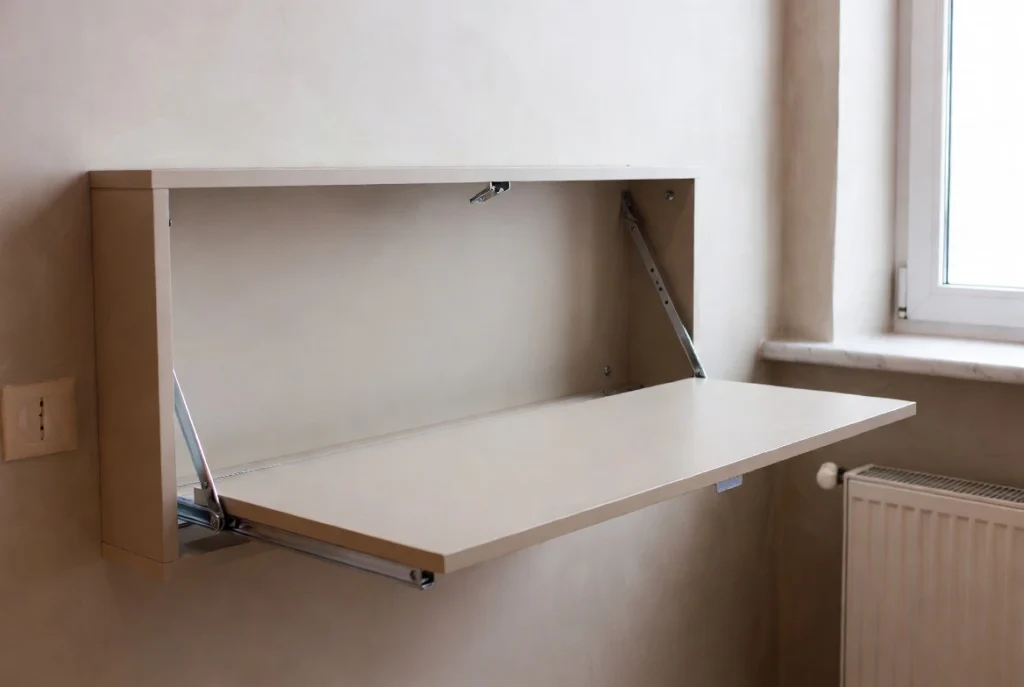
Now? Everything has to earn its spot. My current desk has built-in drawers. My filing cabinet doubles as a side table. I even switched to a fold-down wall desk in my guest room so the space can function as an office during the day and an actual guest room when people visit.
Multi-functional doesn’t mean gimmicky. It means practical. A storage bench gives you seating and hides supplies. A Murphy desk folds away completely when you’re not using it. These aren’t just clever small home office decor ideas—they’re necessary when you’re working with limited square footage.
Smart furniture swaps:
- Replace a standard desk with a wall-mounted fold-down version
- Use a storage ottoman instead of a regular chair for extra seating
- Choose a bookshelf that can also act as a room divider
- Pick nesting tables that tuck away when you need floor space
The best small home office interior design solutions are the ones that adapt when your needs change throughout the day.
6. Keep Clutter Under Control With Simple Systems
Real talk: your small office home office will never stay organized if your storage system is complicated.
I used to have this elaborate filing system with color-coded folders and labeled bins tucked in three different places. Looked great. Never used it. Why? Because it took too many steps to put something away, so I’d just… leave it on my desk.
Now I keep it stupidly simple. Desktop organizer for daily stuff. One inbox tray for papers that need action. Cable clips to keep cords from turning into a tangled mess. That’s it. And guess what? It actually stays clean because it’s easy to maintain.
Storage rules that stick:
- Use a desktop organizer for items you touch multiple times a day
- Install cable management clips to eliminate visual clutter
- Keep one “inbox” tray for anything that needs a decision
- Label bins clearly and keep them within arm’s reach
If your storage requires effort, you won’t use it. Keep it simple and you’ll actually keep it clean.
7. Fix Your Lighting Before You Blame Your Eyes
Bad lighting in a small space makes everything harder. You’re squinting at your screen. You’ve got a headache by 2 PM. Your video calls look like you’re broadcasting from a cave.
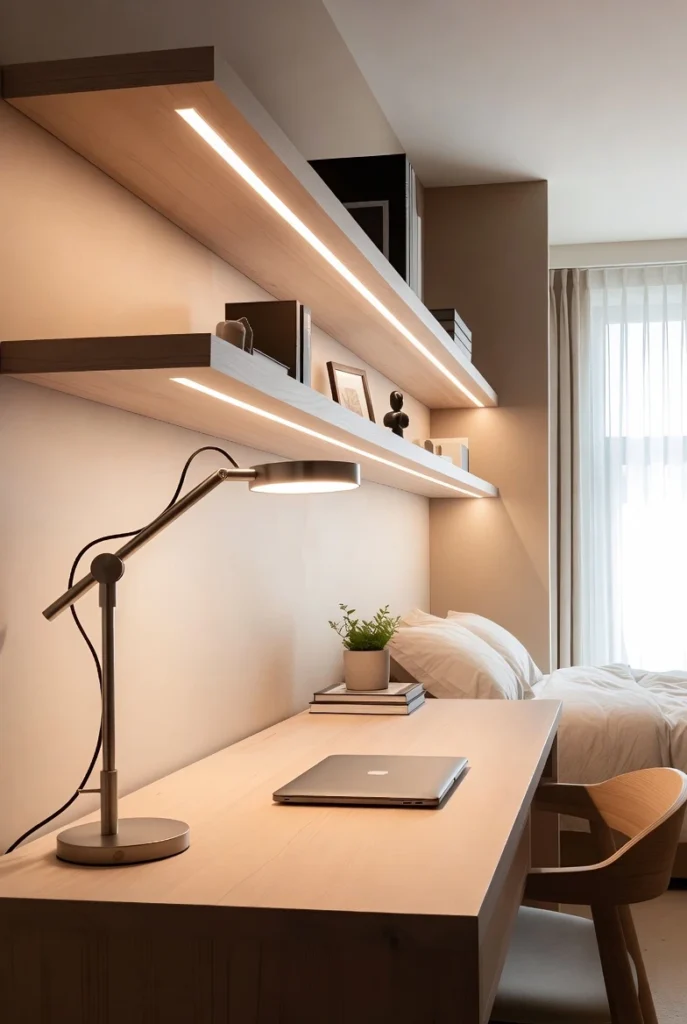
Overhead lighting alone doesn’t cut it. You need layers. I use a desk lamp for task lighting, a small LED strip under my shelf to reduce shadows, and a warmer bulb in my overhead fixture for when I’m winding down at the end of the day.
If your small home office design doesn’t include a window, aim for bulbs in the 4000K to 5000K range during work hours. It mimics daylight and keeps you alert. Switch to something warmer in the evenings so you’re not blasting yourself with blue light right before bed.
Lighting setup that works:
- Add a task lamp with an adjustable arm for focused work
- Install LED strips under shelves or behind your monitor
- Use a warm-toned bulb (2700K-3000K) for ambient evening light
- Position your desk near a window if possible for natural light
Good lighting doesn’t just help you see—it changes how the room feels and how much energy you have at the end of the day.
8. Leave Some Empty Space (Yes, Really)
This feels counterintuitive when you’re trying to maximize space in a small room, but cramming every inch makes it worse.
I’ve worked with remote workers who thought they needed more storage, more shelves, more stuff—when the real issue was that they had too much and no breathing room. A cluttered small room workspace doesn’t just look chaotic. It creates this low-level stress that you don’t even notice until you clear it.
Keep part of your desk open. Leave one wall relatively bare. Don’t stack storage up to the ceiling just because you can. Negative space is part of the design, not wasted space.
Rules for breathing room:
- Keep at least 30% of your desk surface completely clear
- Leave one wall minimal or blank to give your eyes a rest
- Avoid storage that towers over your natural sightline when seated
- Remove anything from the room that doesn’t serve a clear purpose
A small room can feel spacious if you’re intentional about what you keep and what you don’t.
9. Test It Out Before You Commit
Even with solid planning, some layouts just don’t work until you actually live in them for a few days.
Set up your space and give it a week. Does the desk placement cause glare during your morning calls? Is your chair bumping into something every time you stand up? Are you constantly reaching for things that ended up on the wrong side of the room?
Small tweaks—rotating your desk, moving your monitor, swapping which side your lamp is on—can completely change how the space functions. I once rotated my desk 90 degrees after realizing the afternoon sun was making my screen unreadable. Took five minutes. Fixed the problem entirely.
Trial period checklist:
- Track which items you reach for most often each day
- Notice when and where you feel cramped or distracted
- Test different lighting positions at various times of day
- Adjust your chair height and desk setup after a few work sessions
Don’t be afraid to move things around. A productive workspace evolves based on how you actually use it, not how it looked in your head.
Final Thoughts
Designing a workspace in a small room isn’t about cramming everything in or making it look like a magazine spread. It’s about building something that works for your actual life—your habits, your workflow, your space constraints.
Start with what you truly need. Measure before you buy. Create clear zones even if they’re just visual. Use your walls. Choose furniture that does more than one thing. Keep your storage simple. Fix your lighting. And leave some room to breathe.
Pick one thing from this guide and try it this weekend. Move your desk closer to the window. Clear 30% of your surface. Add one floating shelf. You don’t have to overhaul everything at once. Small changes add up.
For more ways to make tight spaces work harder without feeling cramped, check out the full guide on Productive Home Workspace Design for Small Spaces.